
How to Read Korea’s Development Experience: Industry, Infrastructure, People and Institutions
Look beyond the skyline to the connections that make development work.
By Edward Kim | BuildNextSphere
01. Korea’s visible transformation—and the next question
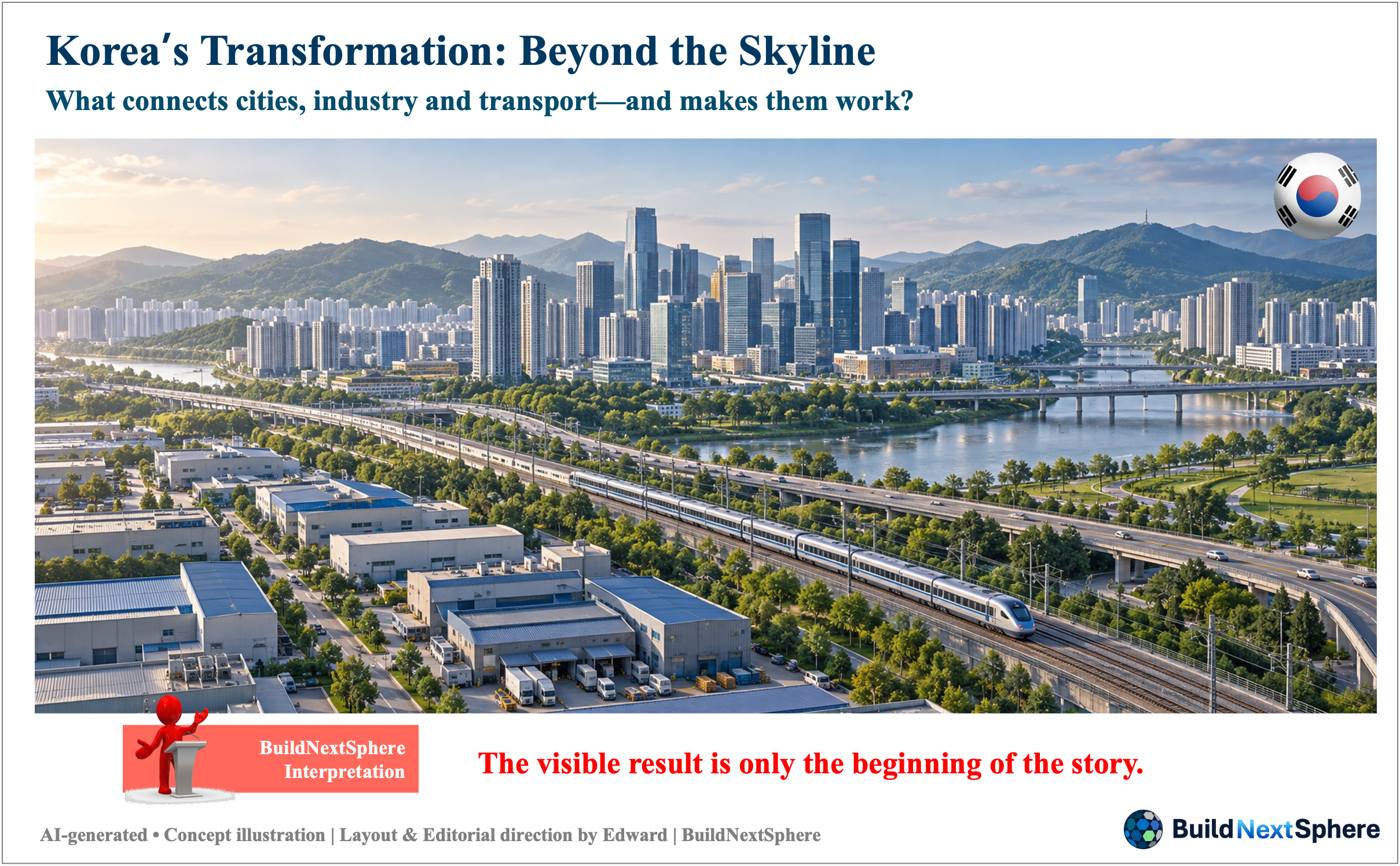
Figure 1. Korea’s Transformation: Beyond the Skyline
Source: AI-generated concept illustration; layout and editorial direction by Edward Kim | BuildNextSphere.
Note: A fictional composite inspired by Korea’s urban, industrial and transport landscapes. It is not a photograph of an actual location and does not establish the causes of Korea’s development.
A skyline can make development look straightforward. Towers rise, trains connect cities, and industrial districts become part of everyday life. Korea’s transformation invites admiration, but the photograph shows the result—not the decisions, institutions and working relationships behind it. The more useful question comes after the first impression: what had to connect for these places to become productive and useful?
The World Bank describes Korea’s transition from a post-war aid recipient to a high-income economy in terms of sustained investment in education, infrastructure and technology alongside economic management. That broad account is a starting point, not a claim that one investment explains everything. World Bank overview
This guide takes the next step after asking why countries achieve different development outcomes. Instead of repeating Korea’s growth history, it offers a way to read a development example: identify its purpose, examine the connections that support it, and ask what evidence would show that it works. You do not need to be an economist to begin. A factory district, a new town or a research campus can all provide a useful starting point.
02. Four lenses for reading development
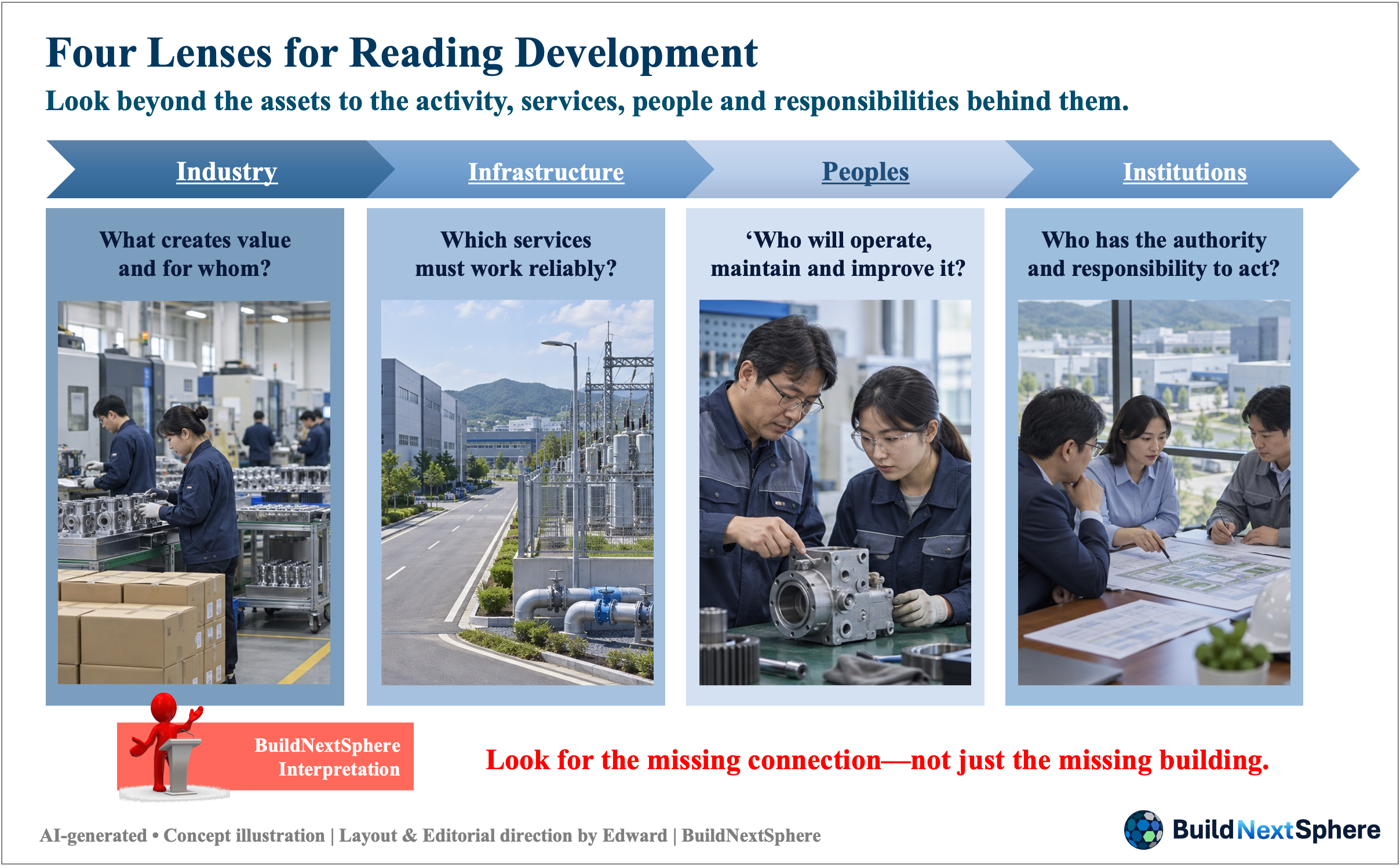
Figure 2. Four Lenses for Reading Development
Source: AI-generated concept illustration; layout and editorial direction by Edward Kim | BuildNextSphere.
Note: Fictional scenes illustrate industry, infrastructure, people and institutions as connected perspectives—not sequential stages or a complete model of development. They do not depict an actual project or verified development outcomes.
Start with industry: what activity is expected to generate value, for whom, and why here? A development plan may describe attractive buildings while leaving demand unclear. For an industrial district, look beyond the number of plots to the businesses that might use them, their customers and their suppliers. Distinguish an aspiration to attract investment from evidence of a viable activity.
Next, infrastructure: which services must that activity receive? A road matters through access, an electricity network through reliable supply, and water infrastructure through suitable quantity and quality. Reading development this way shifts attention from assets on a map to the service people and firms can actually use. It also brings maintenance and operating costs into view.
People are the third lens. Ask who will design, operate, maintain and improve the activity—not simply how many jobs have been announced. Skills matter, but so do the conditions that allow people to stay and work. Training, access to housing and a workable commute belong in the discussion, rather than being treated as problems to solve after opening.
Institutions form the fourth lens: who has responsibility, authority and a continuing obligation to act? Rules on permits, funding, land use and service provision shape the setting in which facilities operate. A signed agreement is useful evidence of commitment, but readers should still ask how responsibilities become decisions and recurring budgets. These four lenses are an editorial guide, not a complete growth model. Finance, technology, international conditions and social or environmental costs cut across all four.
The order of the questions can change with the case. A mature industrial area may need better skills or service reliability rather than more land. A proposed new district may first need evidence of demand. Before looking for a missing building, ask whether the main constraint lies in an existing connection. This is a way to organise reading; the answer still requires evidence from the place and period being examined.
03. What makes an industrial park work?
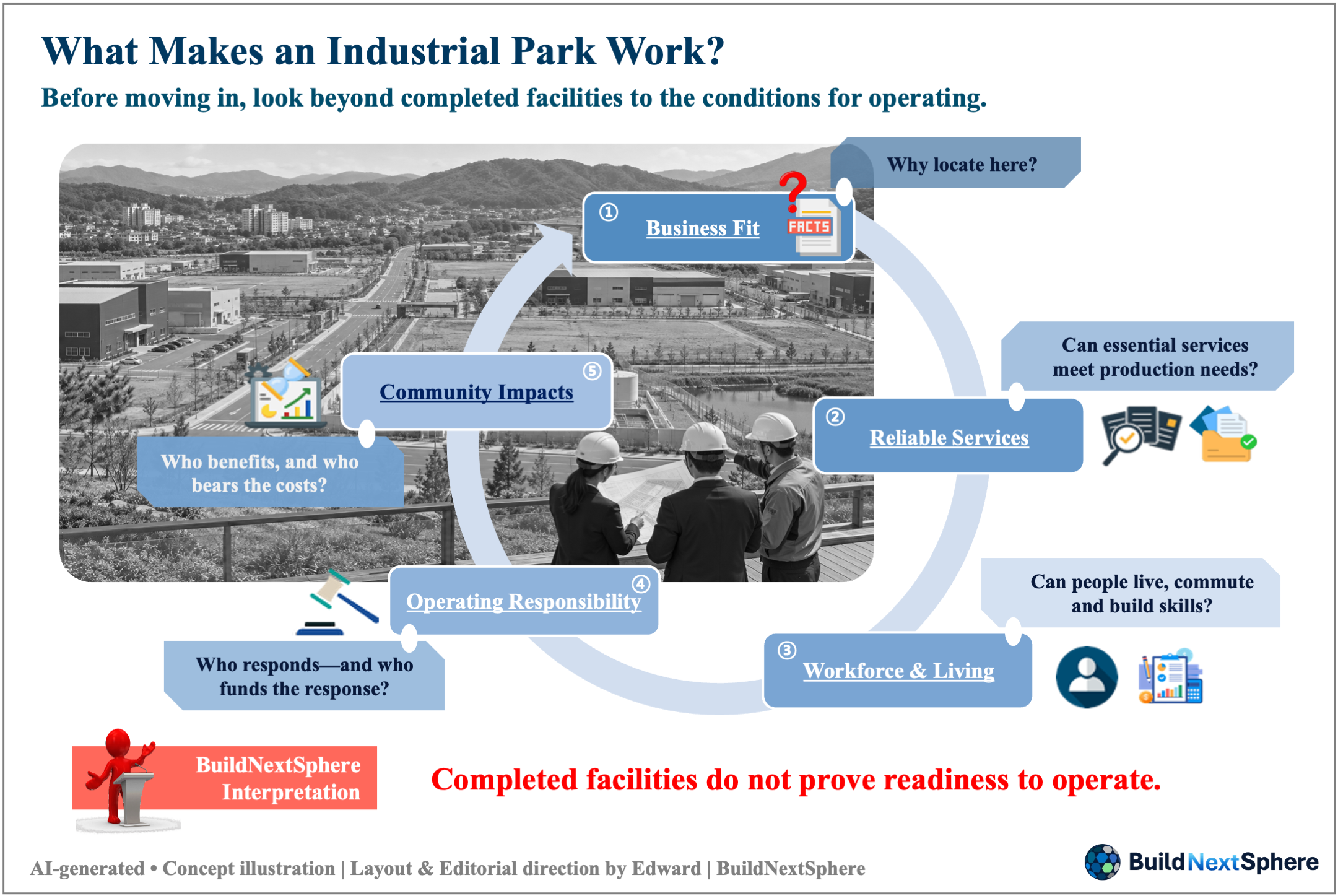
Figure 3. What Makes an Industrial Park Work?
Source: AI-generated concept illustration; layout and editorial direction by Edward Kim | BuildNextSphere.
Note: A hypothetical industrial park viewed by prospective tenants. The scene does not depict an actual project or verify demand, service capacity, operating readiness or business viability. The five items are interconnected review questions, not sequential stages. The illustration does not imply that all facilities must be built at once or provided within the park.
Imagine a newly built industrial park. This is a hypothetical example, not a description of a particular Korean project. Its roads are paved, plots are ready and utility connections appear on the plan. A completion photograph might suggest that the main task is finished. Now imagine that a manufacturer is deciding whether to move in. What would it need to know before committing?
First, it would need a business reason to be there: access to customers, suppliers or a suitable workforce. Then it would test service conditions. Can trucks reach the wider transport network? Are power and water available at the capacity and reliability its process requires? Does wastewater treatment suit the intended production? A connection on a drawing does not answer each of these questions.
The firm would also ask where employees could live, how they would travel, and how skills would be developed as production changed. Housing should therefore be read as part of the workforce and settlement conditions, not counted twice as another impressive facility. Permits, environmental obligations and the identity of the operator also need to be clear. If a service fails, which organisation is accountable, and how is the response funded?
The point is not that every facility must be built at once. Demand may justify phased investment, while some services may be provided outside the park. The reading task is to identify the dependencies and the evidence behind them. An occupied plot, a functioning utility and a sustainable business are different observations. None should automatically stand in for the others.
Also ask who benefits and who carries the costs. An attractive location for firms may create transport, housing or environmental pressures for nearby communities. A reading guide should leave room for these consequences instead of treating investment volume as a sufficient measure of progress. A convincing account explains the intended benefit, the affected people and the trade-offs—not only the opening ceremony.
04. A completed campus is not yet an operating institution
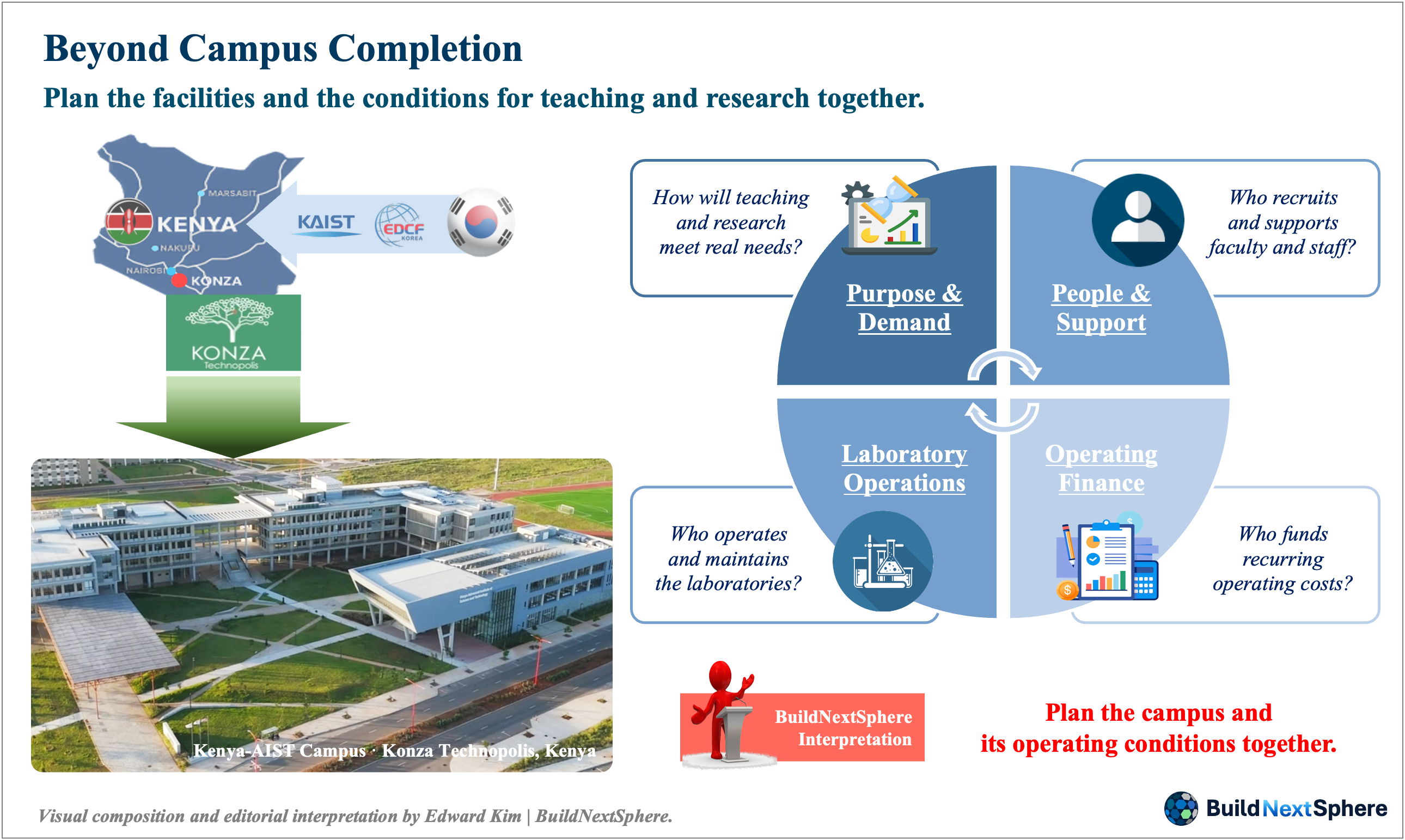
Figure 4. Beyond Campus Completion
Source: Campus photograph, map, visual composition and editorial interpretation by Edward Kim | BuildNextSphere.
Note: The campus image provides context for Edward Kim’s field perspective. The four connected questions address purpose and demand, people and support, operating finance, and laboratory operations—not sequential stages or verified findings about Kenya-AIST’s current operations. This is not an independent institutional evaluation or a like-for-like comparison with KAIST.
The same distinction applies to a research campus. From my involvement in an overseas higher-education construction project, one issue stayed with me: the readiness of buildings and the readiness of the educational organisation did not move together. My observation concerned the gap between physical facilities and the people and arrangements needed to use them. It is a field perspective, not an independent evaluation of the institution or a claim about its present operating status.
Korea’s KAIST offers a useful institutional question rather than a simple success comparison. Its official founding account links its 1971 establishment to a legislative mandate and the recruitment of qualified faculty and students. The lesson for this guide is to examine the arrangements surrounding a campus, not only its architecture. KAIST founding account
For any new institution, ask who recruits and supports staff, funds recurrent expenditure, maintains laboratories and connects teaching or research with a real need. Construction finance and operating finance are not interchangeable. Nor should two institutions be assumed to have started under identical conditions. Differences in their mandate, history and resources make a direct verdict about leadership or national capability too simple. My practical test is narrower: plan the facility and the conditions that make it useful together.
05. Build your development reading map
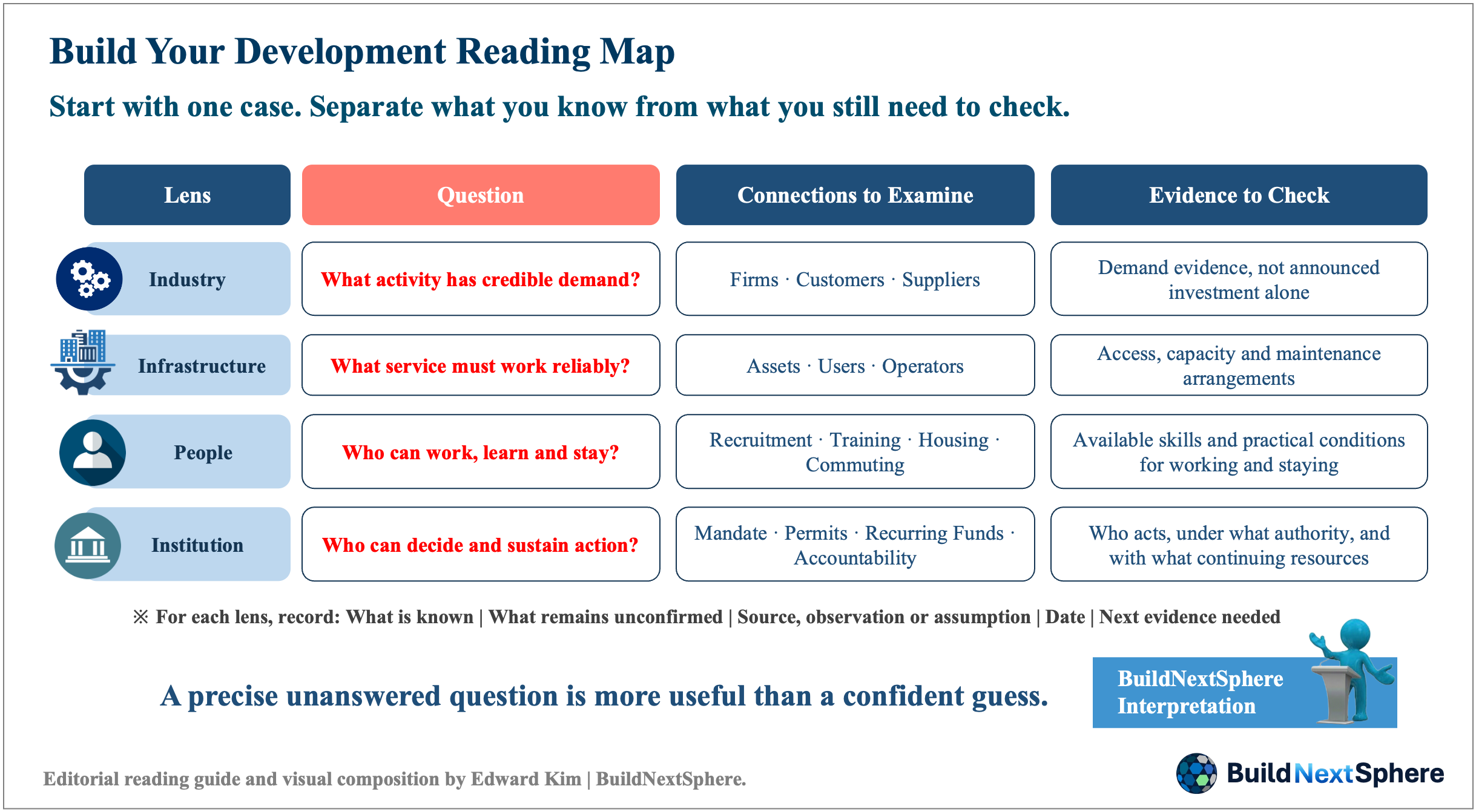
Figure 5. Build Your Development Reading Map
Source: Editorial reading guide and visual composition by Edward Kim | BuildNextSphere.
Note: A question-based guide for examining one development case through industry, infrastructure, people and institutions. Record known information, unresolved questions, the basis and date of each entry, and the next evidence needed. This is not a validated causal model, readiness score or investment appraisal.
You can use the following reading map with a Korean development example—or with a proposal closer to home. Begin with a single case, not an entire country. Write down what the investment is intended to do, then distinguish what you know from what you still need to check. The map is a prompt for inquiry, not a scorecard or an investment appraisal.
For the hypothetical industrial park, a useful first entry might be: ‘A road exists; access for the intended freight movement is not yet confirmed.’ The next evidence could be a route assessment, rather than another photograph. For a campus, the entry might separate completed laboratories from confirmed staffing and recurring maintenance arrangements. A precise unanswered question is more valuable than a broad declaration of readiness.
Do not fill an empty box with a confident guess. Mark whether an entry comes from a published source, a direct observation or an assumption. Record when it was true, and decide which uncertainty matters most to the question you are asking. This keeps the exercise manageable for general readers while making it useful for practitioners who need to distinguish a persuasive story from a supported explanation.
Development reading map
Industry: What activity has credible demand? Connect firms with customers and suppliers. Check demand evidence rather than announced investment alone. Next inquiry: how growth drivers interact.
Infrastructure: What service must work reliably? Connect the asset to users and its operator. Check access, capacity and maintenance arrangements. Next inquiry: the relevant infrastructure case.
People: Who can work, learn and stay? Connect recruitment and training with housing and everyday access. Check actual capability, not headcount promises. Next inquiry: how skills developed over time.
Institutions: Who can decide and sustain action? Connect mandate, permits, recurring funds and accountability. Check responsibilities in practice. Next inquiry: which conditions matter for adaptation.
06. Follow the question, not a success formula
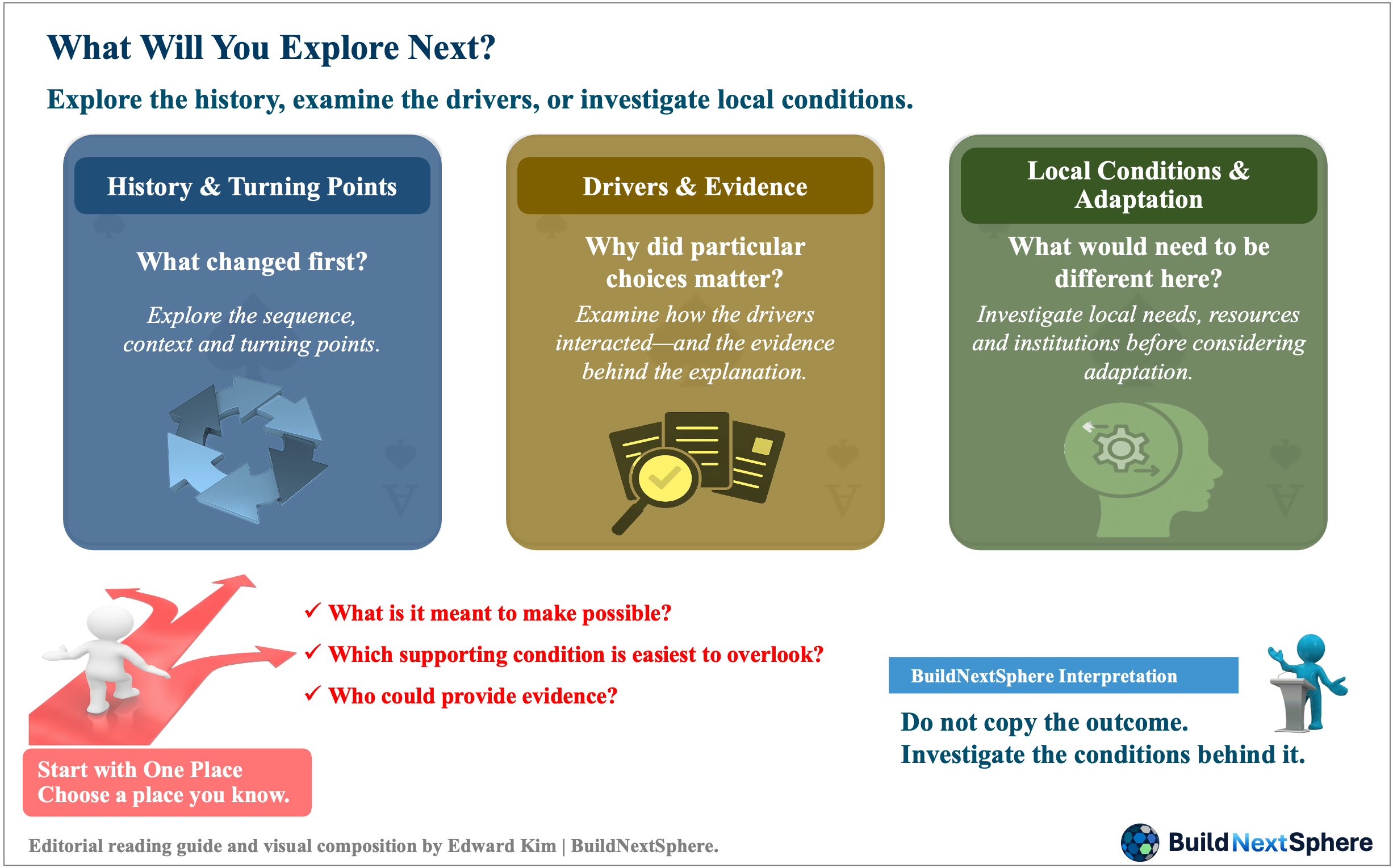
Figure 6. What Will You Explore Next?
Source: Editorial reading guide and visual composition by Edward Kim | BuildNextSphere.
Note: Three connected directions for further inquiry: development history, interactions among growth drivers, and conditions for local adaptation. They are not sequential stages or a transferable formula for success. Explanations and adaptation proposals require evidence specific to the place and period being examined.
Once you have a question, choose the next level of reading. If you want to know what changed first, explore Korea’s development history and its turning points. If you want to understand why particular choices mattered, examine how the drivers interacted and what evidence supports those explanations. If you are considering another location, investigate its conditions before discussing adaptation. Those are connected questions, but they are not the same article.
Korea’s visible achievements can open the conversation. The deeper value comes from learning to look behind them without assuming that their history can simply be copied. Choose one place you know. What is it meant to make possible? Which supporting condition is easiest to overlook? Who could provide evidence about it? That is a practical beginning: not admiration alone, but a better-informed way to read development.
Sources
World Bank — Republic of Korea overview: broad development context used in section 01.
KAIST — Founding Philosophy: founding mandate and recruitment context used in section 04. Accessed 23 September 2026.
Basis of This Article
This article combines a limited set of institutional sources with Edward Kim’s practical perspective on facilities and operating conditions. The industrial park is hypothetical. The anonymous higher-education account is an author-provided observation, not an independently evaluated case study or a statement of current operating status. The reading map is an editorial aid, not a complete explanation of Korea’s growth or a transferable development formula.
Related Reading
Explore more from BuildNextSphere:
- Why Do Some Countries Advance While Others Miss Opportunities?
- When Projects Don’t Go to Plan: What Are We Missing?
- Why Doesn’t Better Technology Always Deliver Better Construction Results?
- The Future of Construction: Which Technologies will Really Change the Site?
BuildNextSphere
BuildNextSphere connects Development, Technology & Project Intelligence through practical, experience-informed content.
About the Author
Edward Kim is the Founder of BuildNextSphere.
He draws on his experience with overseas construction projects to share practical insights from field operations, project delivery, and IT-enabled working systems. Through BuildNextSphere, he explores how people, technology, and real project conditions can help turn plans into action and support better project outcomes.
Edward’s Profile : About Edward
Content & IP Notice
This article and related materials are prepared and published by BuildNextSphere. Unless otherwise stated, the original structure, wording, diagrams, frameworks, and visual materials are the intellectual property of BuildNextSphere and Edward Kim.
BuildNextSphere, its logo, tagline, and brand assets are part of the BuildNextSphere brand identity. Unauthorized reproduction, modification, redistribution, or commercial use is not permitted without prior written consent.
Third-party names, technologies, or references are mentioned for informational purposes only and remain the property of their respective owners.